


Билеты ПДД 2026 и Экзамен ПДД
Дром
I approached Билеты ПДД 2026 и Экзамен ПДД as a practical study tool rather than something to browse casually. It is an Android app in the Auto & Vehicles category from Дром, focused on traffic-rule exam tickets for the State Traffic Inspectorate. The central idea is simple: replace scattered notes and occasional web searches with a repeatable way to practise questions, check mistakes, and build confidence before the real exam.
That focused purpose is also the app’s biggest strength. It does not try to be a general driving companion, a route planner, or a social car community. If I wanted to revise road signs, priority rules, markings, and exam-style situations in short sessions, this is the kind of app I would keep ready on my phone. It is free, suitable for Everyone, and has reached over ten million installs, with a five-star average from around one million ratings. Those figures suggest that it has become a familiar choice for learners, although popularity alone cannot replace a careful look at how well it fits a particular study routine.
How the current version works as a study companion
The current release is version 3.44.0 and requires Android 8.0 or later. In practical terms, that makes it accessible on many older phones as well as recent devices. I appreciate that this is not an app demanding a new handset simply to revise basic rules. A learner can use an everyday phone during a commute, while waiting for a lesson, or at home with a few uninterrupted minutes.
The app’s material is built around exam tickets rather than long textbook chapters. That changes how I use it. Instead of reading rules passively and assuming I understand them, I have to make a choice in a situation, see whether it was correct, and confront the exact areas where my reasoning is weak. For exam preparation, that active approach is much more useful than repeatedly scrolling through a list of definitions.
The reference to current exam tickets and amendments is important for anyone preparing now rather than revisiting an old licence test from memory. Traffic rules can change, and an outdated question set can create false confidence. I would still treat the app as a revision aid, not as permission to ignore official learning materials or an instructor’s explanation. The most useful result comes when I use it to identify uncertainty and then resolve that uncertainty properly.
Latest News

Uber Eats Under Pressure: What Happens When Delivery Goes Wrong

How QR & Barcode Scanner Adapts to Android and iOS Innovations

Why Waze Navigation & Live Traffic Is Your Essential Travel Companion

CapCut Mastery: Unleash Hidden Features for Pro-Level Editing

How OS Updates Enhance Roblox Adventures

Teacher Simulator: Exam Time Turns Quick Classroom Judgments into a Repetitive Loop
Navigation matters more than it may seem. A ticket app can become frustrating if every session feels like a hunt for the right section. Here, the ticket-based format gives the practice a clear shape: begin a set, answer the situations, review the result, and return to the topics that caused trouble. That structure suits people who study in small pieces, especially learners who find a large driving manual difficult to organise.
A realistic daily routine
Imagine I am preparing for a theory exam while attending driving lessons during the week. On a busy morning, I might complete a short ticket session before leaving home. If I miss questions involving signs or right of way, I would make a note of those themes rather than simply starting another random ticket. Later, after a lesson, I could practise again while the instructor’s explanation is still fresh. The app becomes more valuable in that loop because it connects classroom advice with repeated decision-making.
A different user may be returning to driving after years away. For that person, rushing through tickets is less useful than slowing down and explaining each answer aloud. I would recommend reading the situation carefully, identifying every sign and road position before looking at the options, and reviewing mistakes immediately. The goal is not to memorise an answer pattern; it is to recognise why one road user has priority in that particular arrangement.
Gallery
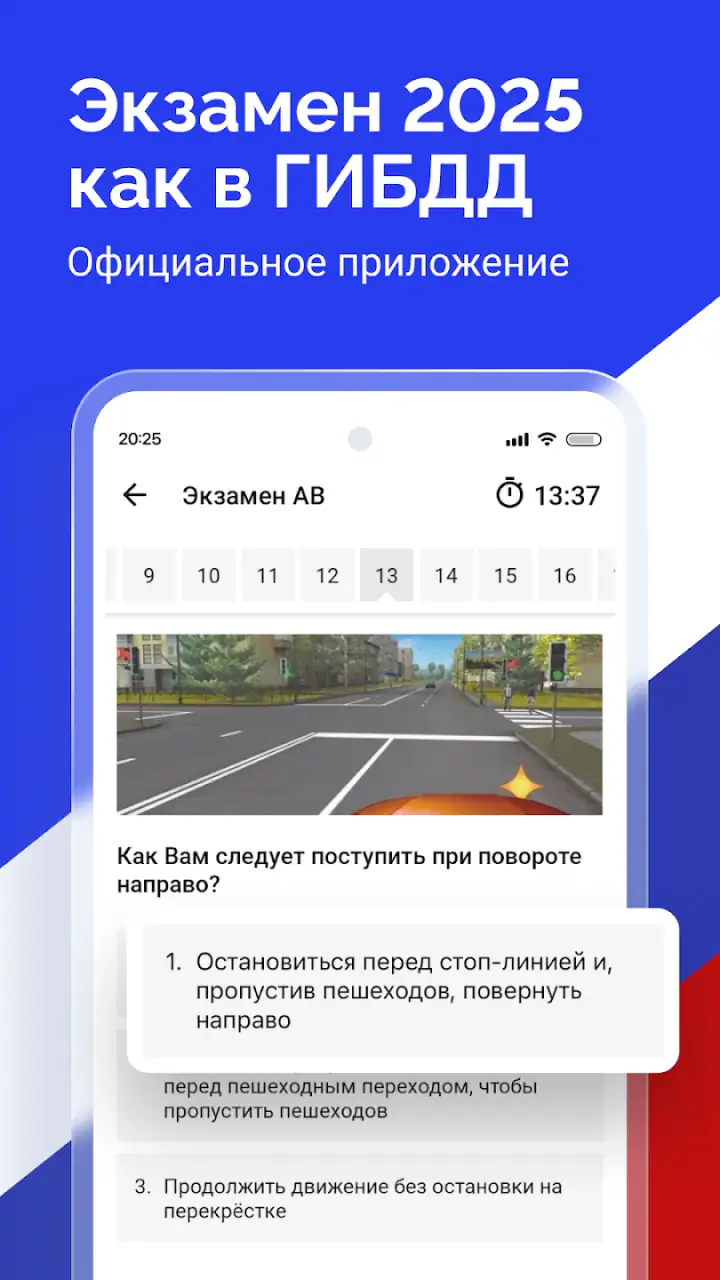
There is also a useful distinction between a practice score and genuine readiness. A learner who remembers the order of answers may perform well inside the app while still hesitating on an unfamiliar-looking diagram. I would deliberately mix normal sessions with slower review, especially after several successful attempts. That small change helps reveal whether I understand the rule or merely recognise a familiar picture.
What the recent version tells existing users
The listed release appeared on March 21, 2017, while the current version is 3.44.0. I read that combination as evidence of a product that has continued through multiple iterations instead of remaining a one-off ticket dump. For an existing user, the important point is not the version number by itself but what it implies about maintenance: the app is still presented as a current tool for exam preparation, and its positioning explicitly includes newer ticket material and amendments.
That is especially relevant to someone who installed it long ago and has not opened it since. I would not assume that an old study routine automatically matches the current exam environment. Before relying on previous progress, I would revisit the available material, check whether the ticket sets reflect the preparation period I am facing, and redo questions where my memory may be based on an earlier rule set. A refreshed practice habit is safer than trusting an old score.
For a new user, the evolution is less visible but still meaningful. The app is not presented as a historical archive; it is aimed at the current preparation cycle. That makes it more useful for a learner who wants one place to practise rather than collecting screenshots or relying on forum answers that may have been written for a different set of amendments.
I would, however, keep expectations realistic. A version update does not automatically mean that every explanation will suit every learner. Some people need a full legal explanation, diagrams drawn step by step, or an instructor who can answer a question in their own words. A ticket app can show the decision you need to make, but it may not replace the patient teaching required when the underlying rule is still unclear.
Where it fits beside the usual alternatives
The most obvious alternative is a printed handbook or a classroom course. A handbook is better when I want to read a rule from beginning to end and understand how several exceptions relate to one another. A teacher is better when a confusing priority situation needs a tailored explanation. The app wins on repetition: it is quicker to test myself, easier to use in spare moments, and more honest about whether I can apply a rule under pressure.
Search engines and video lessons offer another route. They can be excellent for learning a difficult topic, but they are less convenient for measuring consistent performance across exam-style questions. I might watch a clear explanation of a junction and feel that I understand it, only to discover during a ticket that I overlooked a sign. This app is stronger at exposing that gap.
Compared with a broad driving app containing maps, fuel tools, vehicle information, and news, this one is narrower. That is a benefit if my immediate goal is the theory exam, because the interface is not competing with unrelated car features. It is a limitation if I want one application for every part of driving ownership. I would choose this focused tool alongside, not instead of, a proper learning source.
The free price also changes the decision. There is little reason to postpone trying it if I use Android 8.0 or newer and need ticket practice. Still, free access should not encourage careless preparation. I would spend the time saved by having convenient practice on understanding mistakes, not merely tapping through more questions.
Small techniques that make the ticket format more effective
My first tip is to separate recognition from recall. On a familiar ticket, I might remember the image before I have analysed it. To counter that, I would cover the answer choices mentally, describe the road situation in my own words, and only then choose. This is slower, but it gives a more reliable picture of whether I can reason through a new presentation.
My second tip is to keep a compact mistake log outside the app. I would record the topic, the wrong assumption I made, and the rule that corrected it. Writing “I missed the sign” is less useful than writing “I treated the temporary priority arrangement as if the permanent road layout still controlled.” The app supplies the practice trigger; the log turns repeated errors into specific revision targets.
My third tip is to change the time of review. A correct answer immediately after reading an explanation can feel stronger than it really is. I would revisit difficult topics the next day and again after a few driving lessons. If the same rule survives a gap and a different context, it is more likely to be understood rather than temporarily memorised.
A fourth trade-off concerns speed. Fast sessions are helpful for building familiarity with the exam rhythm, but speed can hide sloppy reading. I would use quick runs only after careful review, and I would slow down whenever a question includes several signs, unusual positioning, or a distinction between what is allowed and what is mandatory. The app is most useful when I control the pace instead of treating every session as a race.
What may still frustrate careful learners
The narrow focus can feel repetitive. Someone who already knows the tickets may find that repeated drilling adds little, especially if the real weakness is practical driving rather than theory. In that case, time with an instructor, road-sign observation, and discussion of real junctions may offer more value than another round of familiar questions.
There is also a risk of learning the test rather than the road. Ticket practice presents controlled situations, while real traffic adds weather, visibility, distractions, pedestrians, and other drivers who do not behave predictably. I would never use a strong in-app result as evidence that I am ready to drive independently. It is evidence that my theoretical decision-making is improving within the material provided.
Another limitation is personal learning style. Some users need extensive explanations before they can answer confidently. Others prefer audio, large visual demonstrations, or a teacher’s immediate feedback. A compact ticket app may feel efficient to one learner and abrupt to another. If I repeatedly miss the same concept without understanding why, I would stop drilling and switch to a textbook, lesson, or instructor explanation before returning to the questions.
Because the app is for Android, it is not the natural choice for someone whose study life is centred on another mobile platform. Even for Android users, a phone screen is not always ideal for examining a complicated road layout for a long time. I would use a comfortable brightness level, avoid rushed sessions, and study somewhere I can concentrate rather than trying to solve difficult tickets while distracted.
Who should use it and who should look elsewhere
I think it is a strong match for a learner who wants frequent exam-style practice, prefers short sessions, and is willing to investigate mistakes instead of chasing a perfect score. It also suits a driver returning to theory after a long break, provided the person treats the current ticket material as a starting point and checks any confusing rule through a more explanatory source.
It is less suitable as a standalone solution for a complete beginner who has not learned the basic signs, markings, and priority principles. Starting with random answers can create memorised habits without understanding. I would pair the app with structured lessons at that stage, using tickets to test progress rather than to teach every concept from zero.
I would also look elsewhere if I needed detailed vehicle ownership tools, navigation, maintenance guidance, or a broad automotive community. This is an exam-preparation app, not an all-purpose driving dashboard. Its value comes from doing one job repeatedly and conveniently.
What I would watch before relying on it completely
For current users, I would pay attention to whether the ticket material continues to reflect the exam period they are preparing for, especially when amendments are introduced. I would also watch how clearly difficult answers are explained. Updated questions are useful, but an explanation that helps me transfer a rule to a new situation is more valuable than a simple indication that I was wrong.
I would keep the app updated when a new release is available, then review my saved study habits rather than assuming everything is unchanged. The product’s long-running development and current version make it reasonable to expect ongoing attention, but responsible preparation still means checking the relevance of the material to the exam I will actually take.
My overall view is positive, with one important condition: use it as an active practice instrument, not as a shortcut. The free access, accessible Android requirement, focused ticket format, and current exam orientation make it easy to recommend to someone who needs regular theory revision. Its five-star average and large install base reinforce that it has broad appeal, while the real test is whether I slow down enough to understand every mistake.
For a friend preparing for the traffic-rule exam, I would suggest installing it, completing a few sessions without guessing, and pairing the results with proper explanations and instructor feedback. The best reason to choose it is not that it promises effortless success, but that it makes weak areas visible quickly. Used that way, it is a practical companion for building exam confidence while keeping the limits of phone-based practice in view.
FAQs for Билеты ПДД 2026 и Экзамен ПДД
What is Билеты ПДД 2026 и Экзамен ПДД?
Билеты ПДД 2026 и Экзамен ПДД is an educational app designed to help users prepare for the Russian driving theory exam. It provides up-to-date questions, practice tests, and detailed explanations to ensure users are well-prepared for the official test. The app aims to enhance learning efficiency with its user-friendly interface.
Is Билеты ПДД 2026 и Экзамен ПДД available for both Android and iOS?
Yes, Билеты ПДД 2026 и Экзамен ПДД is available for both Android and iOS devices. Users can download it from the Google Play Store for Android and the App Store for iOS. This ensures that a wide audience can access its features regardless of their device preference.
Does the app provide the latest updates for exam questions?
Билеты ПДД 2026 и Экзамен ПДД regularly updates its question database to reflect the latest changes in the driving theory exam. This ensures that users are practicing with the most current questions, helping them to be better prepared for the actual exam conditions.
Are there any in-app purchases or ads?
The app may offer in-app purchases to unlock premium features or additional content. While there might be ads in the free version, purchasing the premium version typically removes these, providing an uninterrupted studying experience. It's recommended to check the app's store page for detailed information on pricing and features.
Can I track my progress within the app?
Yes, Билеты ПДД 2026 и Экзамен ПДД offers progress tracking features. Users can monitor their test results, identify areas needing improvement, and see their overall progress over time. This feature helps in customizing the study approach to focus on weaker areas and improve performance effectively.
Pros
- Comprehensive question database.
- User-friendly interface.
- Regular updates with new questions.
- Offline mode available.
- Detailed explanations for answers.
Cons
- Ads can be intrusive.
- Limited free content.
- Requires internet for updates.
- Occasional app crashes.
- No dark mode option.


